

Company Profile
Baoji Shenghui Titanium Industry Co., Ltd. is located in Baoji City, which is known as "Titanium City". We are a comprehensive enterprise specializing in smelting, processing, production, sales and R&D of titanium and titanium alloys, refractory and rare non-ferrous metals.
The factory was established in 2012. At present, the company has a complete production line of titanium metal and titanium alloy materials. It has achieved independent processing accuracy and product quality. With professional control, Various bars, processing parts, forgings and deep-sea cabins of different thicknesses, varieties and specifications can be produced on a large scale.
Why Choose Us
Rich Experience
The factory is famous for its physical production, advanced technology, strong technology, excellent quality, timely delivery and high reputation.
Professional Team
An efficient management system will provide you with the best quality goods and earlier delivery. Your satisfaction is our mission.
Quality Control
In strict accordance with ISO9001:2000 quality system certification, our company has successively won high-tech enterprises, 2 national invention patents, 6 national utility model patents, and has become one of the most dynamic processing enterprises in Baoji titanium industry.
Advanced Equipment
The company has 6-ton vacuum consumable electric arc furnace, 4500-ton hydraulic press, electrode welding platform, American Haas four-axis linkage machining center, three-coordinate measuring instrument, CNC lathe, sawing machine and other processing equipment.


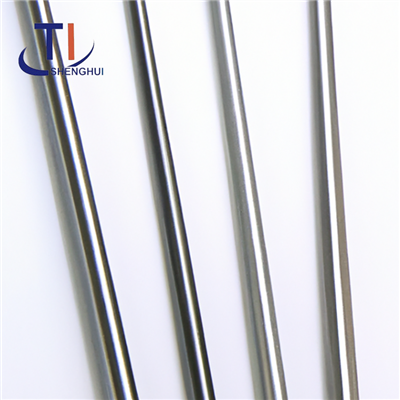
Titanium pipe is light in weight, high in strength and excellent in mechanical properties. It is widely used in heat exchange equipment, such as tubular heat exchanger, coil heat exchanger, serpentine heat exchanger, condenser, evaporator and transmission pipeline. Many nuclear power industries use titanium pipes as their unit standard pipes. According to the material, it can be divided into pure titanium pipe and alloy pipe. According to the processing technology, it can be divided into seamless pipe and welded pipe. As the raw material for the production of finished pipe, pipe blank is also used to make pipe target (pure titanium) for vacuum coating. Pure titanium pipe can be used to produce titanium coil, such as heat exchange, heating pipe, condensing pipe and pipe on heat exchanger.
Benefits of Titanium Tube/Pipe
Weight Savings
The weight savings of using a titanium pipe in high-temperature applications is evident and measurable. Titanium offers the highest tensile strength-to-weight ratio compared to all metals, making it an ideal choice for extreme environments. This means that the are lightweight yet strong and can withstand temperatures up to 600°C and even higher in some cases. Furthermore, their low density also allows for energy savings since transporting and installing them requires less material than other metal alternatives, further reducing operational costs.
Reduced Maintenance and Downtime
Due to their inherent physical and chemical properties, titanium pipe have advantages in high-temperature applications. As a result, there is reduced maintenance, downtime and costs associated with using titanium . Additionally, these characteristics allow for increased flow rates through pipes compared to other materials used in such applications. The reduced friction reduces wear on components, further reducing maintenance needs. In addition, titanium has the highest strength-to-weight ratio of any other metal, making it ideal for aerospace components, saving additional weight and enhancing capabilities.
Improved Safety
Due to their many advantages, titanium pipe are becoming increasingly popular for use in high-temperature applications. One of the most important benefits is improved safety. Titanium has a much higher melting point than other metals, making it ideal for applications where temperatures get extremely high and traditional materials such as steel or aluminium won’t do. Additionally, titanium is corrosion resistant, which helps extend its operational life even in harsher environments that can cause regular steel to corrode and fail prematurely. Finally, it’s relatively lightweight compared to traditional materials, helping reduce overall total system weight, which can improve energy efficiency and reduce cost. All these factors combine to make titanium pipe an excellent choice for any application requiring improved safety in a high-temperature environment.
Lightweight and Durable Construction
One of the standout characteristics of titanium pipes is their lightweight nature. Compared to traditional materials like stainless steel, titanium pipes provide a substantial weight reduction without compromising strength. This feature is particularly valuable for outdoor enthusiasts who prioritize portability. With lightweight titanium pipes, backpackers and campers can enjoy the convenience of carrying their stove systems without being burdened by excess weight.
Common Applications of Titanium Tube/Pipe

Power Generation
Titanium pipes can play a significant role in high-temperature water and steam environments. Grade-2 titanium has already been used in many power plants to handle the problems associated with the failure of condenser and boiler tubes.

Aerospace
Titanium can be used in airframe and engine components for the aerospace industry. Titanium pipes are capable of handling high temperatures without creep. With superior resistance to crack growth and fatigue, the lightweight pipes are recognized for their high strength-to-density ratio.

Oil and Gas
High pressure, high temperature (HPHT) applications such as oil and gas well applications demand piping capable of enduring constant use. The oil and gas industry also needs high corrosion resistance of titanium in areas including downhole, subsea and topside.

Chemical Processing
Highly corrosive environments, such as those commonly found in the chemical processing industry, demand piping systems, heat exchangers, and other systems that are capable of handling high loads. With superior corrosion resistance, titanium can endure high stresses for a long period in extreme environments.
Craftsmanship Titanium Tube/Pipe
Raw Material Selection
The first step in manufacturing titanium pipes is the selection of the raw materials. Titanium ore is mined and processed to extract titanium powder. The powder is then moulded and compressed into billets or bars, which are used to make titanium pipes. The material selection must be precise, with the right amount of impurities removed through the processing stage, to ensure that the pipes made from them have the required properties.
Melting And Forging
Once the titanium billets or bars are ready, they are subjected to the melting process to form an ingot. The ingot is then heated to a specific temperature required for the forging process. Forging primarily aims to shape the ingot into useful forms for further processes. In this case, the ingot is hammered into a pipe shape.
Heat Treatment
Heat treatment is essential in the manufacturing process of titanium pipes. The heat treatment operation is done at a specific temperature to enhance the strength of the pipes and remove any unwanted defects. The heat treatment is also critical in ensuring the pipes’ chemistry is uniform.
Machining And Welding
Once the pipes have undergone heat treatment, they are machined to the desired specifications. This includes cutting and forming the pipes into the desired shapes and sizes. Pipes may also need to undergo welding if the specifications require a greater pipe length than the initial forging produced.
Finishing
After machining and welding, there are final finishing touches that the pipes need to go through, such as polishing and cleaning. This stage aims to ensure that the pipes are free from any unwanted materials and polished to have a smooth surface, making them clean and appealing to the eye.
Installation of Titanium Tube/Pipe
After the arrival of titanium pipes, the owner, construction director, constructors, quality inspectors and welding technicians shall be arranged to inspect the material, standard, quantity, quality and quality certificates of pipe valves. It is necessary to have the factory certificate and quality certificate of the manufacturer. Moreover, the outer diameter and wall thickness shall be measured one by one, and its outer diameter, wall thickness and ovality must meet the specification requirements. The internal and external surfaces shall be lubricated and clean without pinholes, cracks, folds, excessive corrosion and other defects.
Titanium pipes shall be placed equally during transportation. Nylon or synthetic fiber sling should be selected during hoisting. If steel wire rope and shackle are selected, they shall not be in direct contact with the pipeline, and rubber or asbestos products shall be selected for isolation.
For the titanium pipe with good material, if the diameter is small, it is best to get on the bed and make the groove. The speed of the lathe should be slow and pay attention to cooling. For larger diameter (above DN100), a grinder should be used to grind the groove. The operation speed should be slow, complete in several times, and pay attention to cooling. When approaching the requirements, remove the contaminated layer with a fine tooth file until the groove requirements are met. The groove surface shall be flat without crack and double skin, and the burr, slag and oxide shall be completely removed. The groove angle shall meet the welding process requirements.
In the construction of titanium pipe, some small holes such as condensate drainage, drainage and external source taking parts are often encountered, which is difficult to open with conventional methods. Before welding the titanium pipe, draw the size of the hole and the specific and accurate position of the hole on the corresponding titanium pipe. Use a lathe to drill many small holes along the marginal center line of the hole. The denser the better. After all the holes are drilled, tap the central arc plate of the hole with a copper hammer to separate it, and then process the hole to meet the requirements with special tools such as fine tooth round file.
Impurities such as oil stain and oxide film on the surface of titanium pipe will pose a hazard to welding. It is necessary to sort them out before welding. All welding surfaces and the surface of base metal on each side of weldment shall be cleaned with non induced steel wire brush within at least 50nrn. The surface of titanium pipe with oxide layer shall be cleaned of oxide film, and then the base metal shall be cleaned with acetone. It is also necessary to arrange the welding wires in the same way. The processed weldments and welding wires shall be assembled and welded immediately. It is necessary for the operators to wear clean gloves during the welding process. The welding environment should be clean and the wind direction and wind force should be appropriate to reduce the dust in the air, so as to protect the cleaning of both sides of the groove and the welding wire.
Is there any element you know which is called a “super material”? The element is the 9th most abundant element and the 7th most abundant metal found in Earth’s crust, and it’s none other than titanium. The origin of the name can be traced back to Titans Titanium is a low-density (slightly above the half of steel) and high-strength metal and strongly resistive to corrosion. Therefore, it is often alluded to as a “superhero.”
Plenty of techniques are employed to weld titanium and titanium alloys using different techniques such as plasma welding. Likewise, you must have heard of titanium tubes popular for their strength, corrosion resistance, low-density, high-toughness, and many other excellent features. When alloyed with aluminium or vanadium, titanium tubes can demonstrate increased strength while retaining their weight advantage. These facets make it a highly preferred material globally used in shipbuilding, aerospace , and chemical industries.
Titanium Tube/Pipe how To Ensure The Quality Of The Weld?
When titanium tube is used as the welding material, you can ensure the quality by following a few steps. These might include but are not restricted to the below-given steps.
Apply methyl ethyl ketone through a lint-free cloth to remove the titanium tube’s surface contamination (oil, grime, dust, and rust). Let the solvent evaporate completely.
Remove the oxide scale, which can result in a weaker weld if not removed. For this purpose, you can use a carbide file or carbide deburring tool.
You know titanium tube needs full coverage from shielding gas so that you can use pure argon. However, a mixture of argon-helium 75/25 is best for good penetration. By the way, nitrogen and hydrogen can likewise be included in the mix.
It would be best to use a filler metal when titanium tubing is thicker than 0.010 inches. Be sure that the filler metal properties should be as same as the base metal.
The impacts of the heating/cooling cycles associated with the welding process on the mechanical properties of titanium tubes should also be considered.
A high-quality weld is possible due to flat position welding, which is advised in all arc welding techniques and ensures high-quality weld at high deposition rates. It also results in a larger weld pool that causes slower solidification and cooling rates, allowing the gases to evolve from the collection and ultimately dampening the porosity.
FAQ
We're professional titanium tube/pipe manufacturers and suppliers in China, specialized in providing high quality products with low price. We warmly welcome you to wholesale customized titanium tube/pipe made in China here from our factory. Contact us for more details.
Titanium Tube pipe, Pure Titanium Seamless Tube Customization, Titanium Alloy Seamless Pipe