Which Is Better, Titanium Alloy Or Stainless Steel?
Which is better, titanium alloy or stainless steel?
Difference between titanium and titanium alloy and stainless steel
The density of titanium and titanium alloy is only 4.51, which is smaller than steel and only half the weight of steel, but its strength is similar to that of ordinary carbon steel. Titanium belongs to the thermodynamically unstable metal, which is very active. Titanium can form a natural oxide film (titanium dioxide) with air. This stable, strong adhesion and protective oxide film determines the corrosion resistance of titanium, so titanium has excellent corrosion resistance, followed by light texture, high tensile strength and good mechanical properties.
Titanium alloys can be divided into: corrosion-resistant titanium alloy, structural titanium alloy, heat-resistant titanium alloy gold, and low-temperature titanium alloy.
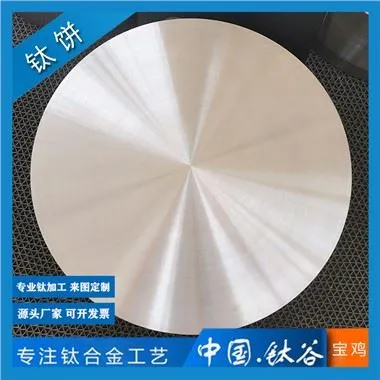
1. It can be distinguished by color. Titanium is a little dark, showing a cool color. I think it is cool. Titanium is a little darker than steel. Steel is white, pale. The two colors are very obvious.
2. It can also be distinguished by chemical methods, that is, using nitric acid to soak. Titanium does not react, and stainless steel will react strongly once it is put down. The distinction between pure titanium and titanium alloy is difficult to see from the appearance.
3. Titanium can draw gray and black marks on the ceramic tile, but stainless steel can't draw marks.
4. Good corrosion resistance of titanium: titanium alloy is easy to form a dense oxide film under 550 ℃, so it is not easy to be further oxidized. It has high corrosion resistance to air, seawater, steam and some acid, alkali and soft media.
5. Good thermal strength of titanium: the melting point of titanium alloy is 1660 ℃, which is higher than that of iron. It has high thermal strength and can work below 550 ℃. At the same time, it shows good toughness at low temperature.
6. Difficulty in titanium processing: welding, electroplating and cold drawing are very difficult. Welding and electroplating must be carried out in vacuum or in the condition full of inert gas (vacuum ion plating)
Titanium alloys are widely used in various fields because of their high strength, good corrosion resistance and high heat resistance.
The density of titanium alloy is generally about 4.51g/cm3, which is only 60% of that of steel. The density of pure titanium is only close to that of ordinary steel. Some high-strength titanium alloys exceed the strength of many alloy structural steels. Therefore, the specific strength (strength/density) of titanium alloy is far greater than that of other metal structural materials. See Table 7-1. Parts with high unit strength, good rigidity and light weight can be produced. The engine components, framework, skin, fasteners and landing gear of the aircraft are made of titanium alloy.
304 is a kind of universal stainless steel, which is widely used to make equipment and parts requiring good comprehensive performance (corrosion resistance and formability). In order to maintain the inherent corrosion resistance of stainless steel, the steel must contain more than 18% chromium and more than 8% nickel.
The density is 7.93 g/cm3, also known as 18/8 stainless steel in the industry. It has high temperature resistance of 800 ℃, good processing performance and high toughness, and is widely used in industry, furniture decoration industry and food and medical industry.
Of course, titanium alloy is better than 304 in high strength, low density and corrosion resistance