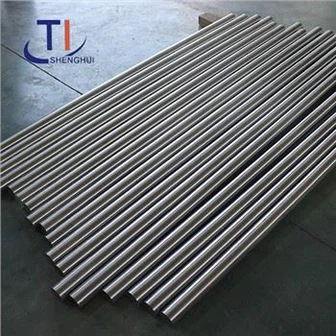
Can titanium rods break?
Titanium rods are renowned for their exceptional strength, light weight, and resistance to corrosion, making them integral in fields such as aerospace and medical devices. A frequent question is whether titanium rods can break. This article explores this question and addresses related concerns to provide a thorough understanding of titanium rods.
Can Titanium Rods Break Under Stress?
Titanium is celebrated for its outstanding strength-to-weight ratio, making it suitable for high-stress applications. However, under certain conditions, titanium rods can indeed fail. Factors that can contribute to the breaking of titanium rods include:
Stress Concentrations: Areas where stress is focused, such as notches or abrupt changes in shape, can be weak points.
Fatigue: Repeated cyclic loads can lead to fatigue failure, even in durable materials like titanium.
Corrosion: While titanium is highly resistant to corrosion, exposure to very aggressive environments can affect its performance.
Manufacturing Defects: Issues introduced during production, such as inclusions or improper alloying, can serve as starting points for cracks.
Though titanium rods can break under extreme conditions or improper usage, such instances are not typical of the material's inherent properties. Proper design and manufacturing practices can significantly reduce the risk of failure.
Common Uses of Titanium Rods
Titanium rods are highly versatile and find applications in various domains due to their unique properties:
Aerospace Industry: Utilized in aircraft and spacecraft parts where high strength and low weight are essential.
Medical Implants: Their biocompatibility makes titanium suitable for implants such as bone screws and hip replacements.
Marine Applications: Titanium's corrosion resistance is advantageous for ship components and offshore drilling equipment.
Automotive Industry: Employed in high-performance automotive parts to reduce weight and enhance fuel efficiency.
Sports Equipment: Titanium's strength and lightness improve the performance of sports gear, including golf clubs and bicycle frames.
These uses capitalize on titanium's strengths, ensuring reliable performance even under demanding conditions.


Comparing Titanium to Other Metals
Understanding how titanium stacks up against other metals helps assess its suitability for different applications. Here's how titanium compares to steel and aluminum:
Strength-to-Weight Ratio: Titanium offers a better strength-to-weight ratio than steel and aluminum, making it ideal for weight-sensitive applications.
Corrosion Resistance: Titanium surpasses steel and aluminum in corrosive environments, making it a preferred choice for marine and chemical applications.
Biocompatibility: Titanium is non-toxic and well-suited for medical implants, unlike many other metals.
Cost: Generally more expensive than steel and aluminum due to complex processing, but its durability and performance often justify the higher cost.
Why Titanium Is Preferred in Medical Applications
Titanium's use in medical devices is driven by several key attributes:
Biocompatibility: Titanium integrates well with bone tissue and is not rejected by the body, making it ideal for implants.
Corrosion Resistance: It resists bodily fluids and does not corrode, ensuring durability and safety.
Strength and Durability: Titanium implants can handle the physical forces exerted by the body, offering reliable long-term performance.
Non-Magnetic: Titanium does not interfere with MRI imaging, making it a safe choice for patients requiring regular scans.
These properties make titanium an excellent choice for a wide range of medical devices, from dental implants to orthopedic hardware.
Conclusion
While titanium rods can theoretically break under extreme conditions, their inherent properties make them highly durable and reliable for various applications. Proper design, manufacturing, and application are essential to minimizing the risk of failure. Titanium's combination of strength, light weight, corrosion resistance, and biocompatibility ensures its continued importance in fields such as aerospace, medicine, marine, and automotive industries.
About Baoji Shenghui Titanium Industry Co., Ltd.
Located in Baoji City, also known as "Titanium City," Baoji Shenghui Titanium Industry Co., Ltd. specializes in the smelting, processing, production, sales, and R&D of titanium and titanium alloys, as well as refractory and rare non-ferrous metals. Established in 2012, our factory features a comprehensive production line for titanium materials, including a 6-ton vacuum consumable electric arc furnace, a 4500-ton hydraulic press, an electrode welding platform, an American Haas four-axis machining center, a three-coordinate measuring instrument, CNC lathe, sawing machine, and other advanced equipment.
We are recognized for our advanced technology, high-quality products, timely delivery, and strong reputation. Adhering to ISO9001:2000 quality standards, we have achieved high-tech enterprise status, secured two national invention patents, and six national utility model patents. Our efficient management system ensures top-quality products and customer satisfaction.
For inquiries, please contact us at 18740375975@163.com.
References
- "Understanding the Properties and Applications of Titanium Rods" - ASM International
- "Fatigue Life and Fracture Mechanics of Titanium Alloys" - Journal of Materials Science
- "Titanium in Medicine: Applications and Benefits" - BioMed Central
- "Comparative Analysis of Titanium and Other Structural Metals" - Materials Research Society
- "Corrosion Resistance of Titanium and Its Alloys" - NACE International
By exploring the questions posed, we gain a better understanding of the robustness and versatility of titanium rods, highlighting why they remain a critical material in various high-performance applications.